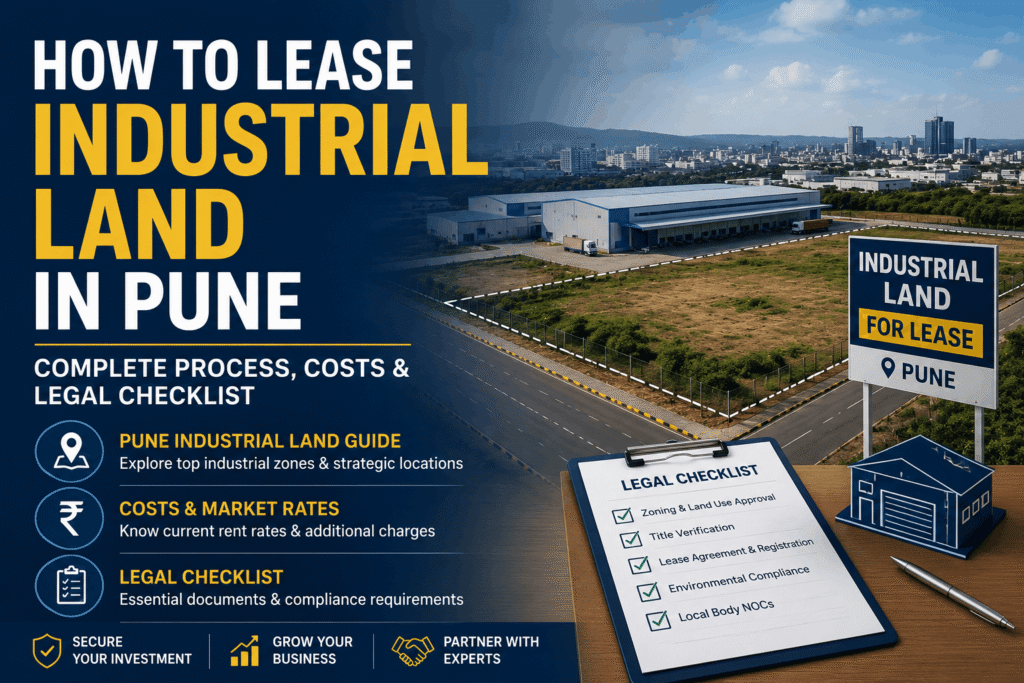
How to Lease Industrial Land in Pune: Complete Process, Costs & Legal Checklist
Securing industrial land for lease in Pune is a strategic milestone for manufacturing units, warehousing giants, and logistics firms looking to scale operations in Western India’s automotive and engineering capital. Pune offers robust infrastructure, skilled human resources, and seamless connectivity through major highways and ports. However, navigating the legalities, zoning laws, financial structures, and land acquisition channels can prove challenging for business owners. Whether you are scouting for an open yard for container storage or a greenfield space for a custom facility, understanding the precise steps, current costs, and compliance frameworks is essential. This comprehensive guide details everything you need to know about locking down an industrial plot on lease Pune, complete with insights into local market rates, regulatory procedures, and professional turnkey solutions. Understanding the Pune Industrial Landscape Before starting your property search, it helps to understand why Pune is a premier destination for industrial setups. The region features established industrial belts overseen by the Maharashtra Industrial Development Corporation (MIDC) alongside expanding private industrial zones. Key clusters include Chakan, Bhosari, Talegaon, Ranjangaon, and Pimpri-Chinchwad. Each zone caters to specific industrial verticals, ranging from heavy engineering and automobile manufacturing to electronics and warehousing. Choosing the right corridor depends on your logistics requirements, raw material sourcing, labor availability, and power supply needs. Furthermore, businesses must evaluate whether an MIDC allotment or private land lease aligns better with their operational timelines and financial constraints. Step-by-Step Process to Lease Industrial Land in Pune Securing industrial property requires a systematic approach to mitigate financial risks and regulatory delays. Follow these essential steps to streamline your leasing journey: 1. Defining Operational Requirements Start by calculating your exact spatial requirements. Consider factors such as: 2. Identifying and Shortlisting Locations Once your criteria are locked, explore prospective parcels across prime corridors. For structured insights into localized industrial zones, you can review market overviews like this guide on industrial land on lease in Pune. Compare options based on accessibility, neighborhood safety, and proximity to your supply chain nodes. 3. Verification of Land Title and Ownership Never skip due diligence. Verify whether the land is privately owned, ancestral property, or an MIDC leasehold plot. Ensure that the lessor holds clear, marketable title deeds free from any active litigation, mortgage liabilities, or legal disputes. 4. Negotiating Commercial Terms Once a suitable property is shortlisted, initiate discussions regarding financial frameworks. Key commercial terms to negotiate include: 5. Finalizing Documentation and Registration Draft a comprehensive lease deed capturing all agreed terms. Ensure the document is formally executed and registered at the local sub-registrar office to protect your business interests legally. Financial Breakdown: Costs of Industrial Land Rent Pune Budgeting accurately for your industrial expansion requires a clear view of ongoing expenses and upfront capital requirements. Market rates vary widely based on infrastructure maturity and geographical positioning. Current Industrial Land Lease Rates Additional Costs to Anticipate Beyond monthly rentals, businesses must budget for: For broader perspective on industrial development benchmarks and national infrastructure trends, consult resources like the India Brand Equity Foundation (IBEF) Manufacturing Sector Report. Comprehensive Legal and Compliance Checklist Overlooking regulatory compliance can lead to heavy penalties, operational shutdowns, or delayed licensing. Use this legal checklist before signing any agreement: Accelerating Your Setup with Built-to-Suit & Turnkey Solutions Managing land acquisition, architectural planning, statutory liaisoning, and structural construction independently can drain valuable management bandwidth and delay commercial operations. This is where partnering with specialized industrial infrastructure developers makes strategic sense. Professional turnkey firms streamline the entire lifecycle—from land sourcing and lease negotiations to precision-engineered building (PEB) construction and regulatory sign-offs. For instance, executing specialized manufacturing plants or warehouses through expert service providers ensures strict adherence to timelines, safety compliance, and cost efficiency. To explore comprehensive project execution models, you can look into professional industrial construction services in Pune. Scale Your Operations with Expert Industrial Solutions Securing the right industrial space lays the operational foundation for long-term manufacturing and logistics success. However, complexities ranging from title verifications and lease negotiations to custom shed fabrication require seasoned industry expertise. At MCON India, we offer end-to-end industrial infrastructure solutions designed to empower your business growth. Whether you need precise land procurement, flexible land leasing arrangements, or comprehensive Built-to-Suit (BTS) facility development, our single-window solutions ensure total compliance, cost efficiency, and timely handover. Don’t let land acquisition hurdles slow down your expansion. Contact MCON India today to speak with our industrial real estate experts and secure your ideal property in Pune’s premier industrial corridors. Frequently Asked Questions (FAQs) 1. What is the typical lease duration for industrial land in Pune? Standard private industrial leases usually run for an initial term of 3 to 9 years with renewal options. In contrast, government-backed MIDC leasehold allotments often span 30, 60, or 99 years depending on the specific lease policy applicable at the time of original allotment. 2. Can I construct temporary or permanent sheds on leased industrial land? Yes, tenants are generally permitted to construct industrial sheds, warehouses, or operational offices on leased land, provided explicit permission is granted within the lease agreement and all local municipal or MIDC building approvals and structural plans are formally sanctioned. 3. What is the difference between leasing raw industrial land versus a ready-to-move PEB shed? Leasing raw open industrial land gives you the flexibility to design and construct a custom facility tailored entirely to your workflow using Built-to-Suit (BTS) or Pre-Engineered Building (PEB) models. Conversely, a ready-to-move shed offers immediate operational readiness but limits layout customization. 4. How does MCON India assist companies looking for industrial land on lease in Pune? MCON India acts as a single-window partner providing complete industrial solutions. We handle strategic land sourcing across key hubs like Chakan and Talegaon, manage lease negotiations and legal liaisoning, and execute turnkey industrial construction and PEB manufacturing to deliver ready-to-operate facilities.