
Setting up a large-scale manufacturing unit or heavy industrial plant requires technical precision, high capital expenditure, and flawless timing. In India’s rapid industrial expansion, successful Industrial Project Execution: Key Strategies for On-Time Turnkey Factory Setup can determine whether a business secures market leadership or suffers massive financial overheads.
Deploying specialized industrial project support services India ensures that every stage of construction—from clearing greenfield sites to commissioning heavy machinery—moves forward without expensive bottlenecks.
Building modern production facilities demands an integrated operational framework. By adopting turnkey factory construction services, manufacturing companies reduce administrative friction, accelerate timelines, and ensure long-term structural integrity. Consequently, businesses can launch operations smoothly while staying strictly within their allocated budget limits.
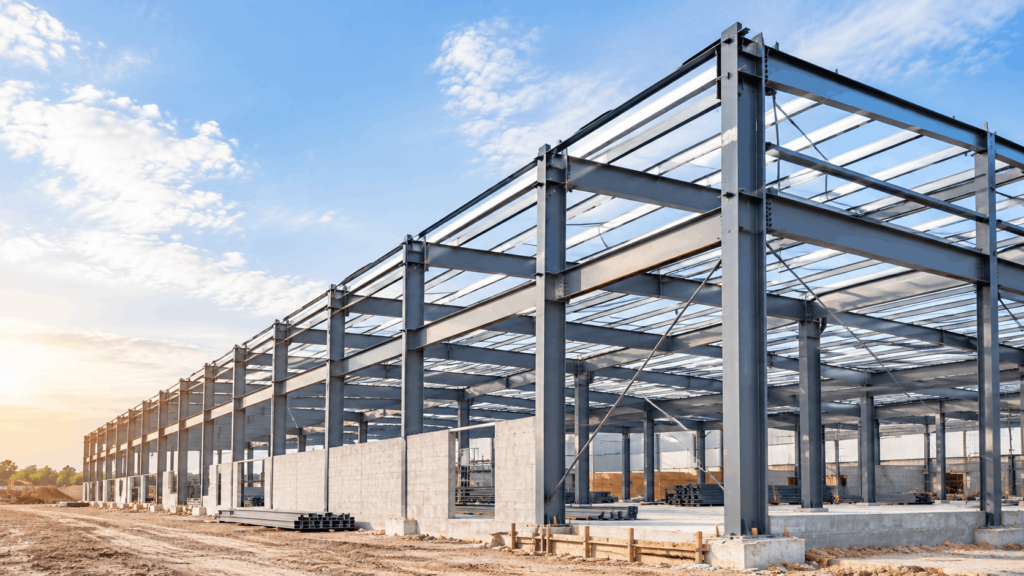
1. Defining Industrial Project Execution in Modern Construction
Industrial project execution is the structured process of converting architectural concepts and process engineering drawings into fully operational physical assets. Unlike standard commercial construction, industrial assets demand specialized structural engineering, heavy dynamic load capacities, and complex regulatory compliance.
When executing complex plants, leadership teams must manage multiple moving parts simultaneously. Partnering with experienced providers of industrial project support services India gives project developers a distinct operational advantage. Experienced EPC teams streamline workflow coordination, manage complex site logistics, and enforce strict Quality Assurance/Quality Control (QA/QC) protocols across every structural component.
Furthermore, turnkey delivery models transfer overall project responsibility to a single specialized entity. This unified management structure eliminates communication breakdowns between design consultants, civil contractors, structural fabricators, and equipment suppliers.
2. Comprehensive Site Preparation and Feasibility Planning
Every successful factory setup begins long before pouring the first concrete foundation. Skipping detailed preliminary assessments often leads to structural failures, unpredicted ground settling, and expensive retrofitting later in the build cycle.
Site Development Execution & Geotechnical Surveys
Before initiating structural work, civil engineers must conduct comprehensive soil testing and topographical surveys. Thorough site development execution involves:
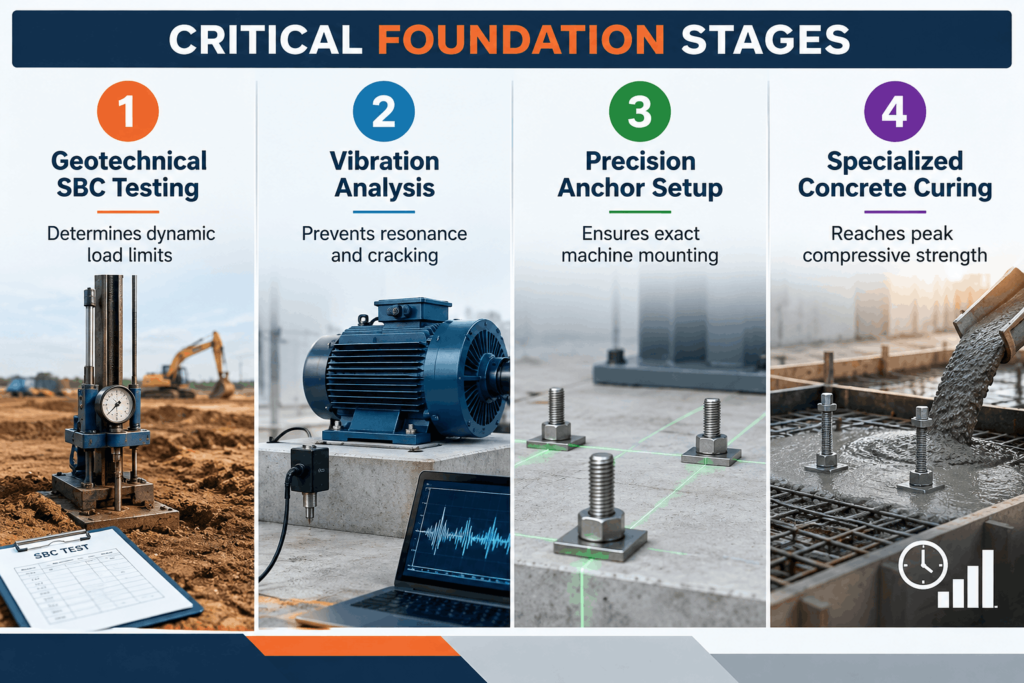
- Conducting deep soil bearing capacity (SBC) assessments to determine foundational depth and pile design.
- Executing ground improvement techniques such as pile foundation driving, dynamic compaction, or soil stabilization.
- Establishing accurate site grading, bulk earthmoving, and storm-water drainage networks to prevent site flooding during monsoons.
Feasibility Studies and Environmental Approvals
Navigating regulatory approvals early prevents project halts during peak construction phases. Industrial developers must secure statutory environmental clearances, grid power allocations, and industrial safety compliance certificates.
According to guidelines by the Ministry of Environment, Forest and Climate Change (MoEFCC), acquiring statutory environmental clearances early is essential for preventing compliance delays during industrial execution.
3. Structural Engineering and Architectural Layout Optimization
An efficient factory layout enhances operational workflow, reduces internal material movement costs, and ensures maximum workforce safety.
Structural Engineering Consultancy & Design Integrity
Engaging a professional structural engineering consultancy guarantees that the plant design withstands extreme operational stresses, heavy overhead crane loads, wind forces, and seismic activity. Structural engineers create tailored solutions for heavy industrial sheds, pre-engineered buildings (PEBs), and reinforced concrete superstructures.
Key architectural considerations include:
- Workflow Optimization: Arranging raw material receiving, processing zones, and finished goods dispatch in a continuous, non-intersecting flow.
- Vertical Space Utilization: Designing clear ceiling heights to accommodate overhead gantry cranes, high-bay storage systems, and extensive piping networks.
- Thermal & Environmental Controls: Implementing adequate roof insulation, natural day-lighting panels, and forced ventilation systems to maintain optimal working conditions.
For complex structural needs, partnering with specialized turnkey factory construction services ensures design blueprints translate accurately onto the construction floor.
4. Specialized Foundation Engineering for Heavy Machinery
Industrial facilities house heavy equipment that generates continuous static loads and severe dynamic vibrations. Standard commercial foundations cannot support these loads without cracking over time.
Machinery Foundation Layout and Precision Casting
Designing an accurate machinery foundation layout is critical for operational longevity. High-vibration machinery—such as stamping presses, heavy forging hammers, turbines, and CNC milling centers—requires isolated inertia blocks.
To maintain precision foundation casting:
- Use high-performance concrete mixes with micro-silica and steel fiber reinforcement to resist fatigue.
- Install elastomeric anti-vibration isolation joints to prevent machine vibrations from transferring to the main plant floor.
- Align foundation anchor bolts precisely using 3D laser scanners to guarantee seamless machine mounting during commissioning.
5. Engaging EPC Industrial Contractors for Turnkey Efficiency
Managing multiple independent sub-contractors often leads to schedule drift, shifting accountability, and uncontrolled cost overruns. Working with specialized EPC industrial contractors creates a single point of responsibility across design, procurement, and execution phases.
| Traditional Multi-Contractor Approach | Turnkey EPC Construction Approach |
| Fragmented communication between designers & builders | Single point of contact for total project accountability |
| High risk of budget variations & scope creep | Fixed-cost pricing models with clear financial controls |
| Disjointed scheduling leading to project delays | Synchronized engineering, procurement, and site execution |
| Complex conflict resolution across multiple vendors | Streamlined vendor, material, and labor management |
By leveraging comprehensive industrial project management, EPC contractors synchronize long-lead material purchases with civil work schedules. Consequently, structural steel, roofing materials, and electrical transformers arrive at the site exactly when needed, eliminating storage damage and bottleneck delays.
For detailed civil work and infrastructure setups, choosing proven industrial infrastructure construction partners guarantees that your build adheres to tight technical standards.
6. Heavy Industrial Infrastructure Development & Utility Integration
A modern factory is more than just a roof and a floor; it is a complex ecosystem powered by interconnected utilities. Heavy industrial infrastructure development focuses on building resilient utility backbones capable of supporting round-the-clock manufacturing.
Core Utility Networks
- High-Voltage Power Distribution: Building sub-stations, transformer yards, and backup generator setups to prevent power outages.
- Process Water & Wastewater Management: Setting up Effluent Treatment Plants (ETP) and Sewage Treatment Plants (STP) to comply with zero-liquid-discharge (ZLD) norms.
- Compressed Air & Piping Networks: Installing high-pressure air distribution systems, gas pipelines, and chilled water loops to feed production lines.
7. Safety Standards and Regulatory Compliance
Safety is the non-negotiable baseline of industrial construction. A single site accident can stall construction, trigger legal penalties, and severely damage corporate reputation.
Safety Standards Industrial Building Implementation
Implementing strict safety standards industrial building protocols keeps workforce operations secure and compliant with national laws. Project managers must enforce:
- Zero Harm Policies: Daily safety toolbox talks, mandatory personal protective equipment (PPE), and continuous site hazard monitoring.
- Fire & Electrical Safety: Installing automatic fire suppression systems, explosion-proof electrical fittings, and clear emergency egress pathways.
- Structural Safety Compliance: Following strict guidelines set by national regulatory agencies.
As outlined in the Bureau of Indian Standards (BIS) National Building Code, adhering to structural safety and fire hazard guidelines is mandatory for heavy industrial assets across India.
8. Strategic Project Controls: Risk Mitigation & Digital Integration
To deliver turnkey projects on schedule, modern industrial constructors employ digital tracking and risk mitigation frameworks.
Advanced Project Control Systems
Deploying scheduling tools like Primavera P6 or MS Project allows project managers to track critical path activities in real time. Potential delays in concrete curing or steel delivery are flagged instantly, enabling corrective actions before the baseline schedule shifts.
Standardized Supply Chain Management
Procuring long-lead equipment early—such as high-voltage switchgear, custom structural steel sections, and industrial chillers—prevents idle site hours. Standardizing material specifications keeps the supply chain resilient against global material shortages.
Partner with MCON India for Industrial Project Execution
Planning a new manufacturing facility or expanding your current industrial layout? Success depends on choosing an execution partner with proven civil and structural capabilities.
MCON India delivers end-to-end industrial project support services India, specializing in high-tolerance turnkey construction, heavy machinery foundations, and structural steel execution. We combine engineering expertise with strict project control systems to deliver turnkey industrial facilities on time and within budget.
Ready to start your industrial setup? Contact our engineering team today to discuss your project requirements and request a technical feasibility consultation.
Frequently Asked Questions (FAQs)
What is included in turnkey factory construction services?
Turnkey factory construction services cover the complete project lifecycle—including site development execution, structural engineering consultancy, civil construction, machinery foundation setup, utility installation, and pre-commissioning assistance.
How do EPC industrial contractors ensure on-time project completion?
EPC contractors streamline operations by handling engineering, procurement, and construction under a single management team. This integrated model removes communication delays, optimizes material delivery, and uses critical-path scheduling to meet firm deadlines.
Why are specialized machinery foundations required in industrial plants?
Heavy industrial machinery creates dynamic forces and continuous vibrations. Specialized machinery foundation layouts isolate these vibrations, preventing structural damage to adjacent buildings while maintaining precision machine alignment.
How does site development execution impact overall construction timelines?
Proper site development execution—including ground stabilization, topographical grading, and soil testing—establishes a stable foundation for civil works. Completing these preliminary tasks correctly avoids unexpected soil failures and engineering delays during later construction phases.
What role does a structural engineering consultancy play in cost optimization?
A structural engineering consultancy optimizes material usage, designs efficient steel spans, and calculates exact load requirements. This prevents over-engineering, cuts structural material costs, and maintains facility safety.